Search This Blog

Showing posts with label Movie Review. Show all posts

Sunday, December 27, 2015

BEST OF 2015

BEST OF 2015
by Alexis Faulkner

The worst movie I watched on an airplane: Entourage. Watched it on the plane ride back home from Hawaii via Los Angeles.

The best movie I watched on an airplane: Amy. A fantastic documentary about Amy Winehouse. I was amazed at the amount of raw footage of her that exists, including lots of recordings made before she was famous and didn’t think it possible that she could make a career of singing. I’d like to note that she wasn’t putting herself down as a singer, she just didn’t think of it as something she could do as a career. It made a fan out of me, though I only took so long to appreciate her music because I hadn’t much previous exposure.

The best place I went: Kauai with my mom & sis. The island is overflowing with elaborately colored roosters and many chickens. My mom convinced me the bushes were overflowing with eggs, but I didn’t check.

Best food: Cart food or maybe cheap sandwiches, $3.50 at a deli near me. DELIS! CARTS! Chicken over rice, man. *When I say cart food, I mean hallal, specifically. I want to make special mention of the delicious food available at the Barclays Center. It is fancy and well prepared, and they have lots of Kosher options, too.

Best Holiday Occurrence: Cooking most of the Thanksgiving dinner while drinking Kahlua and coffee and then later adding vodka having it all come out pretty okay.

Best date: This goes over the course of a couple of dates, actually. I went out with one person several times and they kept explaining how a potentiometer works. It was super interesting.

Best venue visited: I went to 3 sports arenas that I hadn’t visited previously in 2015, and that’s a personal best as far as visiting new sports arenas goes. Some friends and I drank Coors Lite on the Finnerty’s gamebus on the way to Citi Field, and even though we watched the Mets beat the Giants (may the Mets championship dreams rest in peace) it was great fun. Without being terribly rowdy, and attracting far less attention than I expected, a whole sections’ worth of San Francisco fans- mostly expats- sat together and cheered not only the Giants, but the Golden State Warriors, too. The Dubs were playing game 4 of the finals that night, and the game started while we sat in a muggy summer sweat that marks baseball in June on the East Coast. The stadium itself was very clean and easy to navigate, though not particularly charming in terms of architecture. Perhaps the character will come with time.

Yankee Stadium, where I saw the Yankees beat the Mets, was also very clean, well organized and full of particularly edible arena eats. And also very concrete and stale. A nice place to see a baseball game, but with few particularly attractive features, save the fact that you can see the train going by from most seats in the park. It’s nice to know that you are nestled neatly in the Bronx, right there in the mix. The Barclays Center in Brooklyn was my favorite.

This choice was difficult, as I much prefer baseball over basketball, however, the Barclays Center has a very interesting design, with its circular strip of screen that you can see while standing underneath the open structure in front of the entrance gates. The outside of the structure itself is a raw-looking metal that is covered in copper rust, and it has mossy greens covering part of it, as well. The seating inside arena goes up very high, the nosebleed sections are steep indeed, but it seems you can see the action well from any seat. They played good music during the game, lots of 90s hip-hop, among other crowd pleasers. There was a lot of Jay-Z too, which was probably just a coincidence since he no longer has a stake in the arena. The worst thing about the Barclays experience was their sound system. The music sounded awful; the tracks sounded blown out and the volume was low at times. This was highly surprising, considering the newness of the venue and the typical auditory fanfare that goes with live sports events. A final exciting note about the game I attended specifically: about half the audience was wearing blue and gold. There were audible cheers for Stephen Curry, there was applause, and it was not just in our bay area gamebus section. I am so thankful that I got to witness a game during the Warriors historic season starting streak of 2015.

Best change: Leaving Whole Foods Market after four solid years of working there. Grateful for the friends I made, grateful to be creatively explosive upon leaving. New Beginnings, that’s what happened.

Best annoying thing I did: Make out in subway stations, at the bar, on the train. All over town, basically. At some point during 2015 a New York native told me that New York is a sexy town, and I think he was right. I see more public displays of affection than back home, that’s for sure.

Best movie: Love & Mercy. I saw it with my mom and I think it was a little dark for her. The story was inspiring and very sad and Paul Giamatti was very twisted and terrifying. John Cusack, who plays Brian Wilson as an adult, did an excellent job of talking in that fairly shy yet halting manner while still managing to highlight the humanity in a diseased mind through an evolution of a loving relationship. Paul Dano, with delicate execution, showed us the genius of Wilson’s musicianship, particularly as an arranger. He too was quite good at showing the internal pain and confusion as his disease first unfolded.
This is just one of three movies that Paul Giamatti starred in this year. Dr. Eugene Landy certainly was his finest roll. Playing a somewhat similar musical handler of sorts in Straight Outta Compton, he was a much more subtle villain, but still convincing, and in San Andreas he was a weak nerd.

Best album release: Marilyn Manson- The Pale Emperor. Just kidding, I haven’t even heard that record. But I like the name because it’s ridiculous. That man loves bein’ freakin’ pale. And since I don’t like Drake and I wish that band UFO was more interesting, I will go with Justin Bieber’s Purpose. Also, I’m really thankful that Snoop Dogg went back to such a name after being Snoop Lion and starring in hot pocket commercials. ***Really though, Dave Rawlings Machine record was cool.

Best celebrity sighting: None. There are no celebrities in New York City. ALTERNATELY: I recognize no one outside of my own family and I refuse to answer this question. Actually, I suffer from face blindness.

Best NY chillers: Thankful to all of the people who came out to New York and made a point to say hi. This includes my sister, my dad and his girlfriend, Eden, Derek, Mark and Crystal, Scott, Sam and Maggie, Nikos, Walter, Lynne, Victor and Hannah (thanks for taking me to Yankee Stadium), Christine before she moved to New York officially, running in to Anthony on the street in Williamsburg, Talia. Can’t wait for Kat to get here on New Year’s Even— you’re gonna love it here.


Best concert: Thee Oh Sees with Zs as their opener at Warsaw in Bushwick, Brooklyn. This took me by surprise, since I’ve never been a huge fan of this SF originating band. However, their sound has changed quite a bit since I’ve last listened in. Perhaps their move to LA did them some good. They were tight and groovy with a big, rowdy, double drum set set-up. Zs was great, very interesting, but I was so infuriated and distracted by the rudeness of the audience that I feel ill-equipped to critique their set. The echo of the audience talking over their performance is what I remember most.


Most entertaining TV moment: Steve Harvey announced the wrong winner for the Miss Universe competition. He had to correct himself on live tv, leading to an extremely awkward moment whereby the crown had to be taken from Miss Colombia and given to Miss Philippines. Harvey compounded this mistake by offering an apology via a (since deleted) tweet in which he misspelled both countries. He was a great host up until this moment and I loved watching him anyway. 


Alexis Faulkner
 is Unicorn Editor-in-Chief of
 
Uncanny Valley Magazine. 

Tuesday, November 10, 2015

'The Peanuts Movie' Meets Expectations

by Douglas Slayton
Charlie Brown's Peanuts

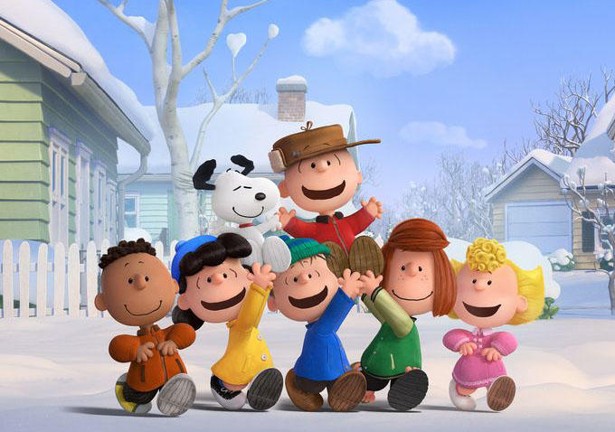
There are three distinct versions of Peanuts: Charlie Brown’s Peanuts, Snoopy’s Peanuts, and television’s PeanutsCharlie Brown’s Peanuts is exemplified by Chuck’s continued failure and questioning of his own worth. Snoopy’s Peanuts is the exemplified by the over-merchandised, lovable optimism, and goofy animal antics that dominated the franchise near the end of Schulz’s life. Television’s Peanuts is the one that tries to find a balance between those two. But in the end, this version of Peanuts is usually smiling (as opposed to frowning) toward the audience, with Charlie Brown saying, “Good Grief” as everyone holds him above their heads. The Peanuts Movie wants to be all three, but most resembles television's Peanutsupdated for a new generation.


Snoopy's Peanuts
The basic plot of the film revolves around Charlie Brown becoming smitten with a new kid who is in his class, the famed Little Red Haired Girl, and attempting to get her to notice him. The film is structured in three distinct acts, each representing an opportunity for Charlie Brown to impress the new girl: a talent show, a winter dance, and a ceremony held in his honor. Each act is broken up by a Snoopy flight of fancy about the World War Fighting Ace saving his love FiFi. The way the story is broken up never feels forced or jarring, but, rather, highlights the dissonance that is present in Peanuts in general—which Kevin Wong documented in his well written piece. It is a necessary consequence of the film's need to serve two masters because of the prevalence of Snoopy in popular culture. The most successful thing about the Snoopy sequences is how they make it possible to have excitement in a film about children with giant heads cursing their own existence. It is a necessary element of a high budget, CG animated film from the creators of the Ice Age franchise.

In each act of the main story, Charlie Brown is given an opportunity to impress the Red Haired Girl but is always foiled, be it by chance or as the result of his being a good or honest friend. While this is reminiscent of Charlie Brown's Peanuts bemoaning life's futility, it ultimately fits safely in the structure of television's Peanuts. On television, Charlie Brown is still a loser, falling for Lucy’s tricks or losing his kite, but even his greatest failings only highlight what a good person he is. That is the Charlie Brown depicted in the film, as well. He is the best of us despite or, perhaps, because of his shortcomings.


It is a very good, if a touch inaccurate, film. While I am someone who has a strange, deep seeded love of Charles Schulz’s most nihilism impulses, even the sunnier versions of Peanuts do a lot to move me. I saw myself in the film by the end and wept, enjoying every minute of it. By taking Peanuts out of four panel strips, giving it a third visual dimension, and putting it in motion, it becomes something else. Schulz, even at his most saccharine, was still using children to address the questions adults have about life and its worth. The doom of his world was always at odds with the outwardly adorable appearance, so it was never a surprise that whenever someone other than Schulz has adapted that world for a larger audience, the sunny exterior would win over the darkness at the center.


This film could have been a mess, trying to honor a work over half a century old, trying to hit all of the buttons that people love, and also introducing the Peanuts world to a new generation. Luckily the film was ultimately a success. Even the CGI animation that had been the source of so much anticipatory consternation prior to the film's release is a joy to watch. Though we will never have a big screen adaptation of Charlie Brown's Peanuts, telling us that life has lost all meaning, I will take this version, indebted to television's Peanuts, and enjoy it all the same.


Doug Slayton is Professor Editor-in-Chief of Uncanny Valley Magazine.

Wednesday, October 14, 2015

Sicario: a Subtle Yet Brutal Thriller


by Alexis Faulkner
Sicario is a disturbingly realistic depiction of a complicated CIA mission involving a Mexican drug cartel and a few FBI agents from Arizona. Emily Blunt stars as Kate, Mercer, a strikingly tough, intelligent and tactically talented leader of a kidnap-rescue FBI task force who struggles with the morality of the CIA’s actions and her own involvement in their plans. The movie is well cast; the varied intensity of the actors adds to the realistic portrayal of law enforcement. Benicio del Toro is both menacing and stoic as the titular character, a hit man with transient loyalties and no particular adherence to any moral code or legal jurisdiction. The leader of CIA special task force, played by Josh Brolin, contrasts del Toro sharply with his smug, gum-chewing, flip-flop wearing, almost overdone air of nonchalance. Blunt is particularly strong as she gives a character with few lines plenty of depth. Her mix of confidence and confusion shows just how disorienting it is to live in a world filled with violent criminals like Manuel Diaz, played by Bernardo Saracino, and mysterious enforcers like Alejandro (del Toro).

Dialogue is sparse throughout the movie; the director focuses on movement and imagery, and we can be thankful for this, as some of lines are cheesy and lack the subtly present in the other elements of the film. Before Kate knows much about their mission, Alejandro says to Kate, “Nothing will make sense to your American ears, and you will doubt everything that we do, but in the end you will understand.” Perhaps if there were more dialogue between characters, this line wouldn’t stand out. However, because Alejandro says very little in the movie, it sounds overly dramatic and cartoonish. This detracts from the film’s overall realism, however, Alejandro warns the audience, along with Kate, of the grisly action ahead.

My favorite aspect of the movie is the way the director builds suspense by allowing the audience to see only what Kate sees. She doesn’t discover the purpose of her involvement in a mysterious mission until well after she participates in the violence it precipitates. Minimal dialogue paired with constant visual action keeps the audience guessing as to where the mission will take the team next and what the consequences will be. The cinematography is striking and captures much of the brutal landscape from first person perspective: shots from a car crossing the border back into Texas from Mexico, shots of the cities most recent victims of violence hanging from the highway in Juarez as seem from a car, shots of the surrounding desert in Mexico and Texas. Director of photography Roger Deakins contrasts these immersive angles with direct aerial shots of vehicles moving back and forth across the border. In a most transcendent scene, the audience is seemingly sent into battle themselves when Deakins uses a night vision effect, and we see through the eyes of the agents searching the desert and heading into an underground tunnel. This mix of film techniques gives us a credible look into life in Juárez and adds to the intensity of the film.

Overall, the movie survives not on story but on feeling— the plot is interesting enough to keep us guessing, but even after the hero has his final moment, there is no sense of absolute resolution. This makes the movie’s realism more impactful. The characters can move on to their next objective, but the audience is left to wonder just how long drug related violence on the Mexico-Texas border will continue. 

Alexis Faulkner is Executive Editor-in-Chief of Uncanny Valley Magazine and in-house film critic. 

Tuesday, August 4, 2015

All Of Our Fault

by Gary Pryor

The movie San Andreas is what is commonly referred to as a “popcorn movie” which, according to
Wiktionary makes it “a motion picture without serious dramatic content, a weighty message, or intellectual depth, which serves simply as enjoyable entertainment.” But much like the snack food from which it takes its name, the real source of worry is the toppings of the popcorn. Just as light, harmless popcorn can be slathered in butter flavored chemicals and salt, what seems like a harmless, fun movie is drenched in sexism, mindless patriotism, and fear mongering.

We'll start by addressing the film's sexism, since that will let me introduce the cast. First there is the subplot featuring Paul Giamatti (known for his great roles such as Heckler #2 and Guy in Sleeping Bag, according to IMBD) playing a character who is essentially the same scientist who appears in every disaster or monster movie who has figured out everything already but is sadly ignored. He is presented as a generally non-sexual character (likely because he is educated and middle aged) though he still manages to “rescue” the female reporter barely-a-character (played by Archie Panjabi) by pulling her under desks several times during the film.

The main cast which consists of a divorcing husband and wife, their daughter, the wife's evil boyfriend, and an out of place pair of brothers who pal around with the aforementioned daughter. The father figure (who may have had a name, but is so often referred to as “father”, “dad”, or “husband” that I didn't remember it—for simplicity's sake we will just call him the Patriarch) is played by Dwayne “I don't want to be called the Rock anymore” Johnson (known for his roles of having his head animated onto a giant scorpion, and wearing a speedo while yelling at rednecks, according to me). The Patriarch is the man's man, he is here to rescue you, and he will (especially if you are related to him). He enjoys the fun attributes of having no character defects, being strong enough to rip off a car door, having inexplicably caucasian offspring, and having the sound of his voice warp reality in such a way that if you do what he says, no harm can come to you. He does feel bad about the death of another daughter, which he only mentions enough to prove that he is humble and ready to discuss his feelings with his estranged wife, thus reclaiming her. He also spends most of his screen time saving women in distress with his earthquake defying helicopter or making lewd sexual innuendos toward his wife as countless people die all around them.

Next we have the wife (played by Carla Gugino known for being the mother of spying children and having sex with a guy in an owl costume according to IMBD), who hangs around to be the target of the aforementioned innuendos, drive various vehicles while the Patriarch is busy rescuing people, and turn on her new boyfriend in the first 20 minutes so that the central family can reunite before the credits roll. With the exception of the minimal driving, she could easily have been replaced by the family dog—which would have had the benefit of making the innuendos seem really strange. Or with a little more work, a dog could drive and it would be awesome (see San Andreas director Brad Peyton's previous work on Cats & Dogs: Revenge of Kitty Galore).

Now we have the new boyfriend played by Ioan Gruffudd (famous for being THE Horatio Hornblower as well as being the voices of lots of things in lots of American cartoons, according to IMDB). He starts out being portrayed as a well meaning nice guy, but “abandons” the daughter after going for help and taking a severe blow to the head, for which he is never forgiven. We only see him twice after that, his only purpose is to have a character you don't mind getting earthquaked. The Patriarch never directly slanders him (but praises his wife for doing so), showing that he reclaim his prize without breaking proper bro etiquette. A true gentleman indeed.

Finally, we get to the daughter played by Alexandra Daddario (who is famous for having breasts in True Detective and for being in a bunch of TV shows I've never seen, according to IMBD). She is our eye candy, from her introductory scene in a bikini, to several plot points where she has to remove clothing for some contrived reason, spending most of the last portion of the movie soaking wet. The camera lets you know what it wants as it continually happens to look down her shirt. She is characterized as both smart and brave like her father, though she cannot complete any heroic action without yelling about how she learned it from her father, undermining any sense of her being independently brave. She has two companions: a 20-something male love interest and his kid brother, who both compliment her looks in just about every other scene. The manner in which she is the primary sexual focus of the film intercut with scenes of her parents searching for her and talking about parental love just feels wrong. Am I supposed to simultaneously want to fuck her and want her to reunite with her uber-macho dad? The combination of her being the damsel in distress (in spite of being portrayed as capable) and the dissonance between the goal of reuniting with her family and the visual of constantly looking at her cleavage are representative of the film's problematic portrayal of women.

I'll address the film's mindless patriotism next. The Patriarch is introduced in the first scene as an Iraq war veteran, which is supposed to help identify him as a hero. Right or wrong, the idea that people who like dumb things (like this movie) also like the military runs deep in Hollywood. You are here so you most be dumb, so you must love America. Do we really need to see the filmmakers drape the American flag over a ruined Golden Gate Bridge like we are proud that our shit fell down? All I can say is that, for me, every time a movie throws propaganda on the screen to try to convince me that I should like somebody more because he was in the military or happened to live in the U.S., it is a waste of the filmmakers' time and mine.

Lastly, I will discuss the film's fear mongering. I am convinced that the movie is a “what if it happened here” reaction to the Tōhoku earthquake. The Tōhoku earthquake and tsunami of 2011 took place on March 11, 2011. Not coincidentally, according to Wikipedia, “on December 1, 2011, it was announced that New Line Cinema was developing an earthquake disaster film.” So earthquakes were trending, people in the U.S. were scared about it happening to them. Hollywood could never pass up such low hanging fruit. The problem is there are 15,891 confirmed deaths from the Tōhoku earthquake. Real people. Not a fun summer movie—real people who have died. And because people are reasonably afraid of natural disasters, it is incredibly easy to sell people a ticket to a fantasy world where the perfect dad swoops down in a helicopter to save you at the last moment from an exciting disaster. Also according to Wikipedia San Andreas grossed “a worldwide total of $461 million, against a budget of $110 million.” So this capitalizing on actual deaths and legitimate fears sure as hell worked. Surprise! Hollywood is terrible. New Line Cinema should be ashamed of cashing in on an actual tragedy, and you should be ashamed for buying a ticket (even if your girlfriend made you like mine did). So all in all San Andreas was a terrible experience on every level: it's a terrible movie, and you are terrible for watching it.

Gary Pryor is an asshole who complains about movies, has other first world problems, and is an all-around white guy.